
What Factors Affect Whole-Home Backup Performance?
February 27, 2026
Whole-home backup power systems are increasingly viewed as essential components of modern residential infrastructure. As households become more dependent on uninterrupted electricity for comfort, food preservation, communication, and health-related devices, the performance of these systems carries greater significance. Not all backup solutions behave the same way during outages, however, and real-world results can vary widely depending on technical and environmental factors. Runtime expectations, appliance compatibility, and overall reliability are shaped by multiple interacting variables. In this article, the primary factors influencing whole-home backup effectiveness are explored to clarify what truly determines system performance.

1. Battery Capacity Determines Runtime
Larger Capacity Runs More Appliances Longer
Battery capacity is one of the most influential characteristics of any home battery backup system. Measured in kilowatt-hours, capacity defines how much energy can be stored and later delivered to household devices. Larger capacities generally translate to longer runtimes, especially when multiple appliances operate simultaneously. Homes with refrigeration, lighting, and communication equipment running together require substantial energy reserves to maintain continuity. Smaller systems may handle brief interruptions effectively but can become strained during extended outages. Capacity therefore acts as the foundational limit on how long a backup solution can realistically sustain daily activities.
Match kWh to Your Home’s Essential Loads
Selecting appropriate battery capacity requires careful evaluation of essential household loads rather than generalized estimates. Critical devices typically include refrigerators, basic lighting, network equipment, and sometimes heating or medical support systems. Each appliance consumes energy at different rates, making cumulative demand the key planning metric. Systems designed with flexible output and expansion options can better accommodate evolving needs. For instance, solutions like the Anker SOLIX E10 solar battery backup illustrate how higher-output configurations, including units capable of delivering around 10 kW of peak power for short durations, can support demanding circuits when necessary. Aligning battery size with realistic usage expectations ensures stability while avoiding both underpowered and excessively oversized installations.
2. Inverter Output Limits What You Can Run
The inverter plays a central role in determining which appliances a backup system can operate at any given moment. While battery capacity governs duration, inverter output controls instantaneous power delivery measured in kilowatts. High-demand devices such as air conditioners, microwaves, or power tools may exceed the inverter’s limits even when stored energy remains available. This constraint often surprises homeowners who assume energy availability alone guarantees compatibility. Proper sizing requires consideration of peak and continuous output ratings relative to expected loads. Balanced system design ensures that both runtime and appliance functionality remain aligned during real-world usage.
3. Fuel or Recharge Source Matters
Solar Recharge Extends Runtime Indefinitely
Recharge strategy significantly affects backup system resilience during prolonged outages. Solar integration allows batteries to recover energy whenever sunlight is available, effectively extending operational duration. Under favorable conditions, daily generation can offset ongoing consumption, stabilizing energy reserves. This capability reduces dependence on external infrastructure and improves long-term reliability. Solar-supported systems often maintain critical loads far longer than standalone battery configurations. Over time, renewable recharging transforms backup power into a dynamic rather than strictly finite resource.
Grid Charging Depends on Outage Timing
Grid-dependent charging introduces a different set of practical considerations. Batteries can only recharge while utility power remains available, creating vulnerability during unexpected or extended disruptions. Outage timing therefore becomes a decisive factor influencing readiness. Systems that automatically manage charging behavior before anticipated disturbances offer improved preparedness. Without proactive energy management, reserves may be insufficient when needed most. Recharge flexibility consequently shapes not only runtime but also overall system reliability.
4. Temperature Affects Battery Efficiency
Environmental conditions, particularly temperature, exert a measurable influence on battery performance. Extremely low or high temperatures can alter chemical processes within energy storage cells, affecting efficiency and usable capacity. Cold environments may reduce available output, while excessive heat can accelerate degradation over time. Modern systems often include thermal management features to mitigate these effects, yet environmental exposure still matters. Indoor installations or climate-controlled locations generally support more stable operation. Awareness of temperature dynamics helps homeowners establish realistic expectations for performance consistency.
5. Which Circuits You Connect
Critical Loads Panel vs. Whole-Home Connection
Circuit configuration determines how stored energy is distributed throughout the house. Critical loads panels isolate essential circuits, ensuring priority devices receive uninterrupted power. Whole-home connections provide broader coverage but may increase demand on battery reserves. Each approach reflects different priorities, balancing convenience against duration. Selective circuit management often yields more predictable runtime during extended outages. The chosen configuration directly shapes how effectively backup capacity supports daily needs.
Prioritizing Essentials Extends Backup Duration
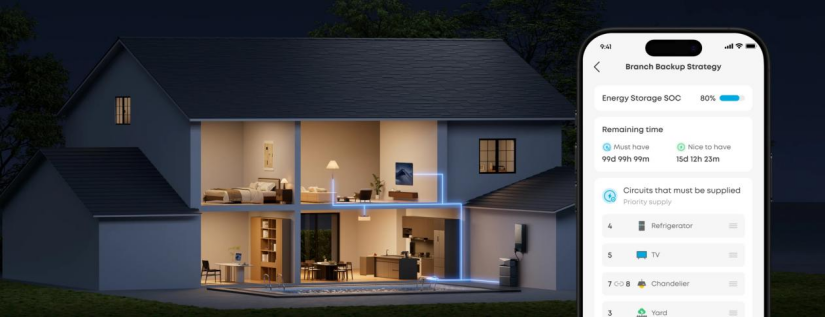
Strategic prioritization significantly enhances backup system efficiency. By directing power toward refrigeration, lighting, and communication equipment, households conserve energy while maintaining core functionality. Nonessential loads can rapidly deplete reserves, shortening effective runtime. Intelligent management systems can automate this prioritization, reducing manual intervention. This coordination ensures that limited energy resources are applied where they provide the greatest practical benefit. Prioritization therefore, transforms finite capacity into sustained usability.
6. Age and Maintenance of the System
System longevity and maintenance practices also influence backup effectiveness. Over time, batteries experience a gradual capacity reduction due to normal chemical aging. Neglected maintenance or improper usage patterns may accelerate performance decline. Regular monitoring, firmware updates, and adherence to manufacturer guidelines help preserve operational reliability. Modern systems often include diagnostic tools to simplify oversight and detect potential issues early. Long-term performance stability depends not only on initial specifications but also on consistent care.
Conclusion
Whole-home backup performance is shaped by a combination of technical design choices and real-world operating conditions. Battery capacity, inverter output, recharge strategy, temperature, circuit configuration, and system maintenance collectively determine reliability and usability. Understanding these factors enables homeowners to evaluate solutions based on realistic needs rather than assumptions. Proper alignment between household loads and system capabilities improves both runtime and appliance compatibility. As electricity dependence continues to grow, informed planning becomes increasingly valuable. A well-matched backup system provides not only emergency resilience but also sustained confidence in everyday living conditions.